Followers

Thursday, July 18, 2019

29 - Napa Valley Trip (and goof)

We had a planned trip to Stockton, CA, in mid-June which extended to visiting relatives in St. Helena in the Napa Valley. Our first two nights were dry camping on Lake Dillon near Frisco, CO, at 9,000 ft. altitude. And it was cold. Down to upper 30's at night. We ran the furnace for a bit and I went to check the propane level gauge, which I forgot to do before. I thought we had plenty, having filled the tank the season before and not using much. I was shocked to see "empty" on the gauge. So we used the furnace sparingly to save propane for cooking until I could refill. In the morning, I tried to start the generator to have electric heat, but that was no-go due to altitude and low temp. I got in the Smart car and drove to Frisco to the propane dealer only to find, being it was Saturday, they were closed for the weekend. I finally found the only open propane outlet a few miles away in Silverthorne, so I returned to the Orion and we got it ready to drive. At the propane store, a seemingly competent young man hooked up the supply hose and started to fill. He stopped after about two gallons saying the tank vent was stuck and he couldn't put any more in. I figured, oh great, another thing to deal with. But I was happy to get enough propane to get us through the weekend and on to a service shop.

Our first overnight after Frisco was Green River, UT. I took the coach to a Pilot station to see if they could do any better filling the propane tank. And they did as if there was no problem at all. I don't know if the Silverthorne guy just didn't do it right, or maybe altitude and temperature were factors. Anyway, there was no problem after all and we proceeded with the trip.

Now all that is a result of operator error on my part. When I put the coach in storage around the first of May, I unknowingly left the furnace on. I did have the battery disconnect switch off for some of the time, but I turned it on for some work and the furnace must have run some during cool periods, which depleted the propane supply. Another lesson learned..... I hope.

From Green River, we traveled Highway 50 across to Carson City, NV. The "loneliest road in America" was sometimes that, but a very scenic and mostly good drive. There are a lot of up and down passes through the various mountain ranges which the Orion handled just fine towing the new Smart. Carson City was a very pleasant stop for a couple of days including a trip to Lake Tahoe in the Smart. From Carson City, we took Highway 88 over the Sierras to Stockton. That had an amazing 50 mile downgrade it seemed from the high point. I really appreciate the tow-haul transmission mode and manual gear shifting. Sure saves on the brakes.


We had a great time in Stockton, the Napa area, and made the return via Interstate 80 to Cheyenne and back home. All coach systems continue to perform well. Driving and living in the Orion suit us perfectly. Calculated mileage for the 2,600 mile trip was 13.4 mpg. The drain valves even behaved and didn't leak. The new Smart (now aka "Baby Mac") towed as well as the previous one. I couldn't tell any difference in how it trailed or impacted the coach performance, even though it is about 150 pounds heavier. The procedure to set it up to tow is different than the older car, but it got routine after a few times. I did have a dead battery in the Smart after three days of continuous towing. I thought I was disconnecting the battery via a knife switch, but discovered two non-OEM ground wire still connected that were keeping the computer and some systems on. Rerouting those ground wires cured the problem.

I have one issue now; the side/rear-view camera system. I get no picture from the left turn signal, and the rear view sometimes goes out. I don't have any changes planned for the Orion except minor ones; adding hanger hooks and adding a shelf to the over sink cabinets. Removing the outside TV to provide storage space for the sewer hose is working well. The driver-side storage compartment is now better organized. Time for an oil change and good wash and wax.

Sunday, June 2, 2019

28 - New Smart Towed Car

We upgraded our towed car. Per my previous post, the choice was a newer Smart to stay within the Orion's towing capacity. I found this 2016 Smart Passion model at a Denver dealer at the lowest price I had seen in looking for a few months. The price was even better when I saw that the car already was equipped with a tow baseplate, through wiring to the tail lights, breakaway switch, and battery cut-off switch, all worth at least $1500 more as installed. The trade deal for my 2013 wasn't good, so I bought the car outright and sold the '13 for a better price.

Old (left) and new (right) Smarts

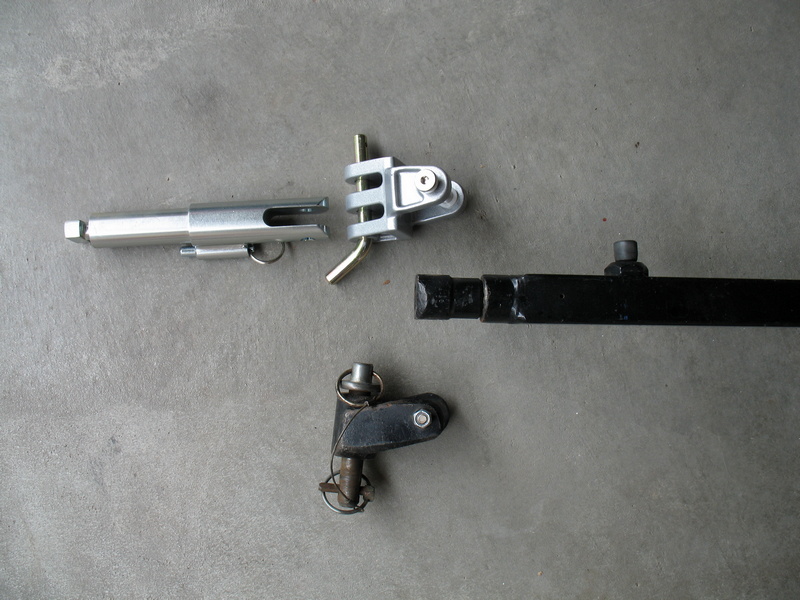
I did have to do some work to get the new car compatible with the Orion. I had Roadmaster equipment--tow bar and Smart baseplate. The new Smart has a Blue Ox baseplate. Fortunately, I could get Blue Ox inserts for the baseplate and Roadmaster to Blue Ox tow bar adapters much cheaper than buying a new tow bar.

Tow bar end with new Blue Ox parts (top), old Roadmaster adapter (bottom)


27 - Remove TV-Gain Storage

Like many current RVs, the Orion comes with an outside TV. We have absolutely no use for an outside TV in our travel and camping style. Taking inspiration from another Orion owner, I removed the TV which opened up a decent bit of storage potential. The lower unit containing the DVD player and speakers is a pretty complicated installation with lots of wiring and impossible to remove from the outside without destroying the unit, so I decided to just leave it be.


Another motive was that I wanted a separate place to keep the sewer hose. I was putting it in a tote tray inside the small outside storage compartment behind the driver's door. That took a lot of space and also was where I stored my water hose and some spare parts. There is really no other outside area on the Orion to put a sewer hose container. The little compartment Coachmen provides is too small to stow a longer hose with the fittings attached.

I constructed a box to fit in the space where the TV had been. It is just big enough to hold a 15 ft. hose with fittings and the end adapter. Now I have extra space in the other compartment for tools.


26 - Hail Damage

One of the hazards of living around the Rocky Mountain front range in Colorado is hail. A hail storm came through where I store the Orion just a couple of weeks after our late April 2019 return from Yuma. When I checked, I found the front and rear roof vent covers were broken from the hail. I put some tape over the cracks and holes to keep rain out until I could replace the covers.


I ordered replacement covers through Wal Mart online, which were delivered in a few days. I bought Camco brand, hoping they were made of a sturdier and more UV resistant plastic. The forward vent is over the drop-down bed. The old covers were translucent white. I ordered a black tint cover for over the bed thinking it would be darker to keep night light out, and cooler. Wrong. I could see through it better than the white one. So I coated it with white Flex Shield spray. I ended up with a white translucent cover after all, although it cuts the outside light more, and maybe the coating will protect it better.

Wednesday, March 6, 2019

25 - Ramblings

Feb-Mar 2019. As I mentioned in the last post, we did a 500 mile round-trip from Yuma to Oceanside and Temecula, CA in late Feb. Towing the Smart, got 13.2 MPG average. We dodged snow, cold weather, and rain but were comfortable. SoCal driving is nuts, but we manage. No new issues have surfaced in either the Transit or the Coachmen systems. The water system worked fine other than continuing to fight leaky drain valves as previously posted. Love the new faucet.

Studying the layout of the drain valve plumbing under the range, everything is really tight under there. I don't see enough room to put in the type of valve I pictured. All piping is PEX with crimp connections, and there is very little room to even reach in there, let alone work with tools. I think some major component removal will be necessary, like taking out all drawers, divider panels, and the microwave. Hate doing that. Maybe talk to the dealer or a RV repair shop for an opinion.

I have read about the changes Ford will be making starting with the 2020 Transit. There are many that will be improvements for RV use. From what I see, there will be new more powerful engines, a 10-speed automatic transmission, swiveling front seats option (are they moving the parking brake handle?), and lots of electronic options. Looks like a new dash design. It will be interesting to see what new RVs will become available based on the redesigned Transit. I would like to see a little more GVWR and towing capacity. A possible trade in our future? A #11 RV? Never say never. I still want a McLaren, but that will require some lottery success. Well, dream on...

Thursday, February 21, 2019

24 - Those Darn Drain Valves

Back in Post 21, I described the problem I had with the little plastic low-point drain valves located under the cook top in the cabinet at floor level. I took both apart and replaced the O-rings. On the first use on our trip to Yuma in December, the valves held pressure, didn't leak through, and didn't cause the water pump to cycle every so often to rebuild pressure.

We are in Oceanside, CA, on Feb. 20, and the valves are leaking. The pump started cycling right after we set up camp. I looked under the coach and the drain line from the cold valve had a steady trickle. I opened and shut and turned the valve handle trying to get the O-ring to seat better and only managed to slow it a bit.

Those valves are going to be replaced. They are not suitable for regular line pressure. There's not much room to work with under there, so it will require some engineering and thinking about what parts would work better, and if I can do it myself. Or maybe hand the problem off to a shop?

These look like a possible solution...  Stay tuned.


Monday, February 18, 2019

23 - Stuck with 2000# Tow Capacity

After considerable research, I finally verified that this Orion tow hitch is rated for 2000 lb. There is no label or stamping on the hitch itself, but I confirmed the rating on a factory spec sheet. I went to a Yuma tow specialty and welding shop to see if it would be feasible to strengthen the existing hitch, or it could be replaced by a 3000 lb. hitch. The purpose of all this was because we would like to tow a slightly bigger car than the Smart. It would be nice to have the extra seats and room. I looked at a Ford Fiesta hatchback that weighs about 2700 lb., is flat towable, and we liked a lot.

The analysis was that replacing the hitch without strengthening the frame was not advisable. Beefing up the existing hitch would involve considerable modification and add weight to the coach. Plus, the shop really didn't want to try for liability reasons.

The pictures below show the issues. The first shows the hitch mount at the rear of the motorhome. The hitch end brackets are attached to the frame extension with only two bolts on each side (circled). I have to trust that Coachmen provided strong enough bolts for the rating, but four bolts are probably not sufficient for 3000 lb.


Even if the hitch was stronger, the frame extensions that Coachmen used are bolted to the Transit frame using eight bolts total. One side of the frame is shown below. This design may be sufficient to support both the weight of the rear part of the coach body and 2000 lb. of towing, but who knows what the reserve capability is? And that hitch connection is five feet back of the frame to extension joint, which means amplifying the sideways and vertical forces from the tow bar to the hitch.


So, I will take the safe route and stick with the current tow setup. That will limit our car options to a newer Smart at best, as any other towable car weighs at least 2300 lb.

Friday, December 21, 2018

22 - Winter Water Woes

We planned our annual departure from Colorado to Yuma for early December. The Orion had been in storage since our October trip except for one outing for dealer service. We had some very cold freezing weather and I found out how good my winterizing procedure was. Answer: not good enough.

In prepping the coach for travel, I connected to city water to flush the system and fill the tank for the trip. I immediately had a flood of water coming out from the cabinet under the kitchen sink. So an emergency mop-up and analysis. My first discovery was that I had forgot to remove the drinking water filter under the sink, which froze and split open. Not having a spare filter, I was glad to find that the water would bypass directly to the filter faucet through the filter unit without a filter being installed. But then when I turned on the sink faucet, water flowed from the head and base as well as the nozzle. Turns out that particular type of faucet head retains a considerable amount of water, and the air I had blown through and the meager amount of anti-freeze pumped through it was not enough to displace all the water. The plastic waterway inside the faucet extension was cracked. I smeared some epoxy glue on the crack which helped to get most of the water to the end with minimal side drips.

Once we got past the water woes, we had a good trip to Yuma. We used the kitchen sink sparingly. Fuel mileage was good for being well-loaded and towing the Smart at 13.3 mpg, with one tank at 14.6. I had more water woes in our Yuma house, but that's another blog. After getting settled, I ordered a filter and a new Peerless faucet from Amazon. Received them in two days and installed in an hour. I opted for a plain high-rise faucet with no spray which my wife said she didn't need in the RV. Less parts. All metal unlike the cheap plastic OEM faucet. And I have added two more steps to my winterizing procedure. Hopefully next year will be less dramatic.


Tuesday, November 6, 2018

21 - Two years with Orion

Update to October, 2018. We have now had our Orion for two years and have put about 14,000 miles on it. The coach continues to perform well for us and fits our needs well. Since arriving in Colorado for the summer, we have taken one 4-day camping trip in the Colorado mountains (reported in previous post) and a 13-day trip to Branson, MO.

The trip to Branson in October provided a couple of different experiences. While overnighting en route in east-central Kansas, we were in an all-night torrential rainstorm that started about 10 PM and didn't let up until breakfast time. I'm not sure how much rain, but it had to be over three inches. There was a lot of flooding at some intersections in towns and in fields, but we had no delays getting on. The good news was that the Orion was tight and we had no leaks. It was rainy and cool for most of the trip, but we were very comfortable all the time. We saw another advantage of our set-up. Some of our campsites were tight, and being only 24 ft. with no slides was an advantage.

I would have to say that the total of problems we have had in two years is pretty normal and relatively minor overall. One of the low point drain valves developed a slow leak which would cause the water pump to cycle ("burp") every couple of minutes. Very annoying when we were not hooked up to city water and needed to use the pump. I am not fond of the cheap plastic valves Coachmen uses. But I found they can be dis-assembled to replace the O-rings, which solved the problem for now.


The drain valves

Another problem that cropped up was with the rear/side view camera and monitor system. When we started home from Branson, the monitor was stuck on one side camera view and was unresponsive to input from the controls. It was intermittent after that--occasionally working or stuck on one view or not working at all. Now that we are home, it is functioning as if nothing was wrong. I sent a request to Coachmen and got a response of where the control unit is located to do some trouble-shooting. I'm just waiting to see if it misbehaves again.

Coachmen has been pretty supportive to my requests for information. They sent me a set of electrical schematics which I like to have for reference. I have asked twice about the tow hitch capacity but have had no response so far. I want to know if I can tow more that 2000 pounds, up to 3000 pounds because we might consider getting a bigger tow car, like a Ford Fiesta which is about 2600 lbs.
I also took the coach to the Ford dealer for an oil change and for the Transit recall which had something to do with auxiliary wiring. The bad news was that it took four hours to get done while I waited. The good news was my bill for under $100 for elective service. Again, happy not to have a diesel unit and the extra cost.

Finally, since we are not going to AZ until December, I had to do my first total winterizing. Everything was straightforward until I tried to suck antifreeze into the water lines from a container using the water pump. Nothing happened. After some inspection of the plumbing setup, I discovered an in-line shut-off valve between the water tank and pump. Closing that allowed the pump to draw from the antifreeze container rather than the tank. No wonder people pay the price to have a professional do the winterizing. If you don't have the experience and aren't analytically inclined, you would be lost.

Friday, August 3, 2018

20 - Mountain Driving and Camping

End of July 2018. We did five nights of camping in the Colorado mountains. We drove from Parker to Frisco and spent two nights in a USFS campground on the shore of Lake Dillon. This was totally dry camping; no hookups. All systems performed perfectly and we had more than adequate battery capacity thanks to the solar setup. The first site was only a bit uneven but not too long. This is the advantage of having a shorter rig.


Then we drove to a CO state park on the Colorado River just east of Palisade. Here we had a nice pull-thru site with full hookups. Good thing as it was over 90 every day and the A/C ran from about 10 AM until dark.

(aside) There are some comments and concerns about the bed covering a vent and A/C outlets when it is stowed against the ceiling. The vent is no problem, because it wouldn't be open when running A/C. The two A/C outlets would be helpful in cooling the forward part of the coach. I found that opening the main register halfway directs some air to the ceiling vents, but most comes out directly in the middle. This seems to be the most effective for total cooling. I will sometimes drop the bed about 4 inches which allows some air to come out to the front. I also set a small electric fan on the floor by the bath door blowing forward. Overall, no real issue with the bed "up there" affecting cooling or ventilation, in my opinion.

After four days of use, I emptied the holding tanks and refilled the fresh water before departing.

Our return trip took us back to the Lake Dillon campground where we found one empty site. The pad sloped quite a bit but I was able to get "bubble centered" level with a bit of work using ramps and a jack. The jack under a frame crossmember got me the last inch I needed. Some criticize those who strive for perfect level saying it isn't necessary because new refrigerators have more tolerance for slant. That may be true, but I like the comfort factor, not having doors swing, as well as being nice to the fridge. If I can get it level, why not?


TRANSIT MOUNTAIN PERFORMANCE. We had full water tank, full fuel tanks, moderate household goods, and towed the Smart car. Our route is from 5,900 ft. to over 11,000 ft. elevation at the I-70 Eisenhower/Johnson tunnels, and Vail Pass. Going westbound seems easier than eastbound due to the longer approaches. The most strenuous tests for our rig were the 6% grade from Georgetown to Silver Plume westbound, and the eastbound climbs to Vail Pass summit and I-70 tunnels from Silverthorne. I was able to maintain 45 mph at 5,500 rpm in 2nd gear on the steepest parts; otherwise, 50 to 55 was practical. I have no complaints about performance since these extreme grades and altitudes are such a small part of our travels. As I stated earlier, a 1978 Minnie Winnie 20' Class C we once owned barely maintained 35 mph in low gear all the way up the I-70 climb to the tunnel, and that with a 400 cu.in. big block Dodge V8, nothing in tow, much less weight.
I also applaud the tow-haul transmission mode. I rarely had to tap the brakes on the steepest downgrades to keep speed in check. The transmission usually downshifted itself while I just steered and kept my foot off the pedals, and the speed held well.

SOLAR PERFORMANCE: Refer to details on my solar installation in a prior post. With three days of off-grid camping, the two 12v house batteries always had adequate charge for our needs. Below pic shows charge and battery data for three days off-grid, one partial and one total day on shore power. The "Today" reading is incomplete as we arrived home then. The panels are putting out over 40 volts and somehow a full 100 watts at peak. The system is performing as I had hoped, and I love the Bluetooth monitoring app.


Friday, May 25, 2018

19 - Solar Installation and Gen. Oil Change

I've just completed a maintenance item and the installation of a solar power system on the Orion. The generator oil change was straightforward and easy: run the gen. a bit to warm the oil; remove the cover panel; remove the fill cap/dipstick; put a catch pan underneath and remove the drain plug and wait for all oil to drain; replace drain plug; add 600 ml new oil; run gen. a few minutes; recheck oil level; tidy up. I only spilled one drop of oil and that was off the funnel when I removed it. I used a 15w-50 diesel oil (Wal-Mart brand). In researching oils, the better diesel oils met the viscosity and service standards recommended by Cummins/Onan. I have used such oil on previous RV generators and never had any problems. Future oil changes will be dictated by time rather than hours of use, as I've only put 18 hours on it since October 2016.

The solar installation went pretty smoothly. My main components were two Renogy 50-watt mono-crystalline panels, a Victron MPPT charge controller, and a couple of 15-amp circuit breaker switches. I installed the controller and switches inside a drawer cabinet to be out of sight, yet accessible.


I ran the battery positive lead to the always-hot terminal of the battery cut-off switch located low by the entry door. That will provide charging whether the cut-off is on or off. The components are next to the refrigerator, which made for an easy way to route the cable from the panels through the vent stack behind the refrigerator without having to drill holes through the roof.

The two panels were attached just forward of the A/C unit and near the fridge vent to minimize the length of cable run, and in some unused roof space. The brackets are screwed to the roof as well as glued with marine-grade poly adhesive.


On previous RV's, I had a 60-watt panel for two batteries and a 30-watt panel for one battery. My main objective was to keep the batteries charged through long storage periods, and provide some extra recovery charging for camping without hookups, and those served my needs well. The Orion has two batteries, so I decided on a bit more power (100 watts total). We don't boondock enough to require several hundred watts of power, and budget also was a factor. The panels are wired in series to provide 37 volts nominal output while keeping the amps the same so the feed wires don't need to be heavier gauge. Victron recommends the higher voltage setup for better efficiency.

This particular controller has Bluetooth connectivity with an app that Victron provides for smart phones. After I started the system and got the app synced with the controller, there were immediately two firmware updates that installed automatically. When those completed, I got status readings on my phone. This was morning, and the app showed 56 watts output along with charge parameters to the battery. Later near noon, I saw 84 watts output.


I believe this setup will keep the batteries in good shape. There are four modes of charging including equalize, which can be configured to be off or repeat as desired. Other parameters can also be set via the app. I am very happy with the outcome and performance so far. No more significant projects contemplated--time to go traveling and camping.

Thursday, May 3, 2018

18 - April 2018 Weight Check

We made our spring migration from AZ to CO in April. We load all our clothing and food for transfer between our houses, and that was about 6 packing boxes worth. In addition, I pack a couple of bags of tools and other miscellaneous gear that we need wherever we are. So, the Orion is pretty well loaded along with towing the Smart car, plus a tank of fresh water for use during our four day trip. Since this was more heavily loaded than we would normally be, I thought it was time to get a weight check to be sure I wasn't overloading the coach.

I stopped at a CAT truck scale in Willcox, AZ. It was nice to have the 3-segment scale to get separate weights for the Orion front and rear axles and the car. Because I had to get out of the RV to press the call button, I didn't get my own weight added, but the numbers are helpful anyway. Here are the scale weights in pounds compared to the maximum GVWR published for my RV:

                                     Scale               GVWR               Margin

Front axle                     3220                 4130                    910  (740 if I deduct my weight)
Rear axle                      5940                 7275                   1335

Total                            9160                 11300                  2140

Smart car                     1960

Total combined           11120                12300                  1180

I was happily surprised that there is plenty of reserve capacity with our combination. I could load a ton more on the Orion if not towing, or I could tow a car weighing over 1,100 pounds more if desired. Another reason that we didn't seriously consider a Promaster based unit because they only have a 9,600 # GVWR. Just not enough reserve for my comfort.

The trip home was good. We had some strong tail winds and I was showing mid 14 mpg on both gauges, but I never did a hand calculation. The RV is now partially winterized and in storage. I have two 50 watt solar panels and a MPPT charge controller on hand to install in the next few weeks. I also will be changing the generator oil; a bit overdue since it hasn't been changed since purchase in Oct. 2016, but I only have put about 14 hours total on it. Looking forward to some relaxing local camping around Colorado this summer.

Friday, March 23, 2018

17 - Winter 2017-18


We came to Yuma, AZ in early December of '17 and took up residence in our park model home at a golf/RV resort. Since then, Phrynie has mostly been tucked away in the storage lot (above). I took her out for a good cleaning and one solo 3-day camping trip to the mountains between Yuma and San Diego in early February, and then to the local Ford dealer for her second oil change and checkup. The Transit and all coach systems continue to perform well with no new problems or anything needing attention. I have kept StaBil in the gas for storage and faithfully exercise the generator and A/C every three to four weeks.

We took a leisurely seven days on our trip from Colorado to Yuma in December. One night was dry camping at a Wal Mart; the remaining were with hookups in commercial campgrounds. I did not dump tanks until the last night as we had plenty of capacity.

One addition I made earlier was to add a second Group 24 deep-cycle battery under the entry step. I ordered a hold-down clamp from the local dealer but it did not arrive in time for my use, so I simply cut a piece of OSB to fit around the battery to keep it in place, and that is working fine. If I get the clamp, I will have to do something with that thick encased cable so the battery will sit tight against the compartment side like the original on the left. That cable has zero slack which is why the new battery is slightly slanted.


Another minor thing was the fire extinguisher recall. I filled out the claim on Kidde's web site but never got a confirmation or heard anything from them after a couple of months. So, I filled out a second claim and sent another email saying I needed to get the replacement extinguisher delivered before we left Yuma. Again, no feedback. But without any notification, the replacement showed up via Fed Ex finally, and it fits in the original wall holder even though it is shaped a bit differently.


I was asked about my tow hitch extension. The Orion has a stock 1-1/2" receiver, but I need a 2" receiver for the car tow bar. I bought a 3000# rated 1-1/2" to 2" adapter and hoped the Orion hitch was also rated 3000#. If it had been a 2000# hitch, the solid bar part of the adapter that goes into the receiver would be too long and I would need to cut some of the bar off. But it was indeed a 3k hitch, so all was good. I bought a high strength class-8 1/2" bolt to use as the hitch pin. Then I went to a weld shop and had the adapter welded to the Orion hitch for security, strength, and to eliminate rattles. This is permanent; I have no need for a 1-1/2" system. The weld is circled.


I plan to get a true scale weight of the coach and the Smart car when we are loaded for travel. I need to know if we have much reserve capacity for load and towing. We will be returning to Colorado around the third week of April.

Summer projects will include the installation of a solar charging system. I have two solar panels awaiting back home, and I will be ordering a charge controller shortly. More later.

Monday, October 16, 2017

16 - More Driving Impressions and Results

With almost 10,000 mi. of travel experience, am I still happy with the Transit's performance as a RV chassis? Yes.

 I have not yet weighed our rig when loaded in our usual travel configuration--clothing and personal items, food, camping gear, etc. The Smart car that we pretty much always have in tow weighs about 1,900#. The most challenging route we have encountered so far is several trips over Raton Pass between CO and NM. Raton has a 6% grade at 7,800' elevation. I can maintain the 55 mph speed limit either direction. I have not tried Vail Pass yet (7%, 10,666'), but I expect that would slow us down. The 3.7L Transit V6 revs freely and the 6-speed transmission shifts as needed, so I have no concern being able to handle most any driving situation. Also, going up steep mountain grades is a small portion of our travels anyway. We once owned a Minnie Winnie Class C that had a Dodge big block (400 c.i.) V8 that barely pulled the same grades at 30 mph in low gear, and not towing anything.

As far as gas mileage, that has been pretty consistent at 12.5 loaded, towing car, and running A/C. I have not driven much unloaded (no towing, no A/C), but when I do, the ScanGauge and dash computer both indicate 14-15 mpg consistently.

Monday, October 9, 2017

15 - Maxx Fan & Water Filter

I have also mentioned the omission of a high volume fan like a Fantastic or Maxx fan in the Orion. I had a Fantastic fan in our last Class B, and it was fine. I opted this time for the Maxx fan only because I liked the dual support arms vs. the Fantastic single arm. Probably not that big a deal. I got the most basic manual model just as we had before and it serves our purpose well; mainly, to exhaust air at good volume with multiple speeds from whisper to jet.


Not having a ladder (prior to installation detailed in previous post), and being concerned about running a power supply wire, I engaged a mobile RV technician to help. It was an expensive choice (3 hours charged labor), but I just wasn't confident for this task. The job was pretty straightforward; remove the manual center vent and clean up, run a 12v supply wire, and install and caulk the new fan. Running the 12v wire was the time eater. The Orion has aluminum spar rafters with solid foam between them, the ceiling, and the roof deck material. We opted to get the power from the rear vent bath fan. One spar was immediately to the front of the bath fan, so a hole was drilled in it. A wire probe pushed from the center vent through the foam to the rear didn't hit anything until it hit the rear vent spar, or so we thought. It would have seemed reasonable to push a wire from the rear vent through the drilled hole and aim for the center vent, but that wasn't possible because of interference of the rear wall. So it was a matter of pushing the probe from the center vent and try to hit the drilled hole. It was finally located and the wire pair was pulled through. Connections were made to the rear fan supply and the Maxx fan installation was completed.

This installation was definitely worth it. We have spent many comfortable nights sleeping in warmer weather by turning the fan on to a lower speed and only opening the vent over the bed which brings the cool night air right in on us. Also shown in the picture is the full-length mirror I installed on the bathroom door.

We like to have a water filter for drinking water and coffee and tea. I found a Culligan kit which included a faucet, cartridge filter, connection adapter, and water lines. I drilled a hole through the counter at the right rear of the sink and mounted the faucet. I disconnected the cold supply hose at the faucet and installed the adapter tee, then reconnected the supply hose. I put a reinforcing board behind the panel under the sink and mounted the filter bracket to that. Connecting the lines to the filter, faucet, and adapter was just a matter of cutting to fit and push into the respective connector sockets. I like this filter because it only takes a quarter twist to remove or install it. We never buy bottled water because the filter makes all water we have encountered taste just fine. I use the basic carbon filters, but you can get higher filtration types. Same in our houses.


14 - Rear Ladder

The Orion 24RB does not come with a rear roof ladder, which is probably a cost-cutting decision since so many of Coachmen's other models include them as standard. Most of my previous RV's had ladders, and I find that I often want to get up on the roof for inspection or maintenance work; especially when I am travelling and do not have access to a regular ladder. Therefore, installing a ladder on my Orion was on my "to do" list.

I wanted a black single piece ladder but it so happened that Amazon had an unbeatable price on a chrome-color jointed ladder, so that's the one I opted for. Now the instructions say, and I am well aware, that the ladder mounts need to be screwed into solid material to support the weight. Thinking about the lightweight "Azdel" construction of the Orion, I was pretty sure that solid backing was not likely, and more so given the relatively limited mounting location options.

So, I spent a lovely (and full) day planning, measuring, cutting, and fitting to get it right. Once I had everything fit and assembled, I drilled the holes for all the mounts. At each mount point, I scuffed the surface of the Azdel, mixed and applied some 3,300 psi marine epoxy, and screwed each mount into place. I was right about having no solid material to drill into, only the thin ply of Azdel and backing material. But with 32 screws and about 15 square inches of epoxy bonded contact, it seems to be more than strong enough.


13 - Side Table & Add'l Shelf

There is quite a bit of space between the front end of the couch and the driver's seat. The floor of that space turns out to be a pretty good place for our cat's litter box. Adding a "table" over the space helps hide the litter box some as well as give some extra surface to set things on.


I found the shelf at IKEA. The size was just right so I didn't have to do much sawing to fit, and the color is a pretty good match to the rest of the decor. I mounted the shelf/table to the wall using a "L" bracket underneath. The table sits on the end panel of the couch held in place with double-side tape.

There was enough shelf material left over to make a small corner shelf for use from the rear side of the bed. Now the person on that side has a place to put their glasses or book at night. It is mounted with glue and a couple of small "L" brackets on the top that aren't easily seen from below.


12 - Remount Main TV

I previously posted how the main front TV was mounted so low that the "eye" for the remote control was below the line of sight to control the TV while seated. I had to hold the remote up near the bottom of the bed to operate the TV. So, a remount was necessary. I unplugged the TV from the outlet in the right side compartment and then unscrewed 4 mounting screws that were accessible on either side behind the TV. These screws were through a mounting board and into the front wall panel. The TV is pretty light, so I was able to hold it to disconnect the A/V and antenna cables and pull the power cord through and free, and lay the TV aside.

Next, I measured the length of the mounting board attached to the back of the TV and marked two vertical reference lines with masking tape on the front wall panel to the outside of the centered width of the board. I cut two lengths of 2x4 stud lumber to a sufficient length from the joint where the front panel angles back to another panel and down below the original mounting holes. These are spacers to move the TV closer to the front edge of the ledge it sits on as well as raise it a bit. Since all this material is out of sight behind the TV, precision and appearance are not critical. If you stand close at either side of the TV, you can just see the mounting. For that reason, I painted the edges of the mounting board and spacers black.

I glued and screwed the spacers to the forward panel using the tape reference lines to locate them. In preparation to remount the TV, I first installed a 10 inch HDMI extender cable into one of the spare ports on the back of the TV. I previously discovered that the way the TV was mounted, it was impossible to get my hand behind it to plug in an auxiliary HDMI device. The extender cable socket is now accessible at the left side of the TV.

Remounting the TV was a reversal of the removal steps. Route the power cable back to the right compartment, reconnect the A/V and antenna cables, and then position the TV by centering the mounting board in front of the newly installed spacers. Then I drove the original mounting screws through the original mount board holes into the spacers. The spacers added enough distance so the TV sits on the ledge near its front edge with the remote "eye" well exposed to any angle of view. One added detail in the pre-mount sequence was to put a couple of short strips of thin foam insulating tape on the bottom edge of the TV so it wouldn't make contact noise while sitting on the ledge. They don't show from the front. Now I can operate the TV without having to stand up, and I can easily plug in my laptop or Roku via HDMI cable.


Saturday, September 23, 2017

11 - Solar Cover, Windshield Tint, Shelf

This is a post of some of the first of several additions or fixes I have made to "Phrynie," our Orion. (Aside...Our RVs acquire names. This Orion is named Phrynie and our Smart toad car is named Dot. If anyone has watched "Miss Fisher's Murder Mysteries" on TV, you will understand where those names came from.)

1. Solar screen windshield cover. I took Phrynie to Arizona RV Parts Center, aka SunPro Manufacturing, in Wellton AZ to have a solar cover made. I had purchased two of their covers previously for our two former motorhomes, a class A and a class B. Their screen is an excellent product and the ones I got were made to order from stock patterns. However, they had not made a cover for a Transit so Phrynie was their first Transit unit. I got a great discount plus some extras because they were able to create a pattern from my unit to be able to use for future stock orders. I use it whenever we are stationary for more than a couple of days. You cannot see in during the day but can see out well and it really cuts the sun heat. It also is a decent window screen when lowering the side windows.


The SunPro cover mounts using corner pockets at the top rear edge of each door, strong magnets at the bottom, and a strap through the mirror arms. It also comes with the wiper covers, the wipers also helping to hold the cover in place. SunPro also made pockets like these for my original solid vinyl Orion windshield cover, which has made it much more resistant to slipping or blowing off.


2. Windshield tint. I felt right from the start that the Transit windshield came up too high and directly over me. So I had a local window tint installer put a tint band across the top of the windshield. It is actually two bands either side of the dark expansion matrix behind the camera monitor and about the same distance down. It seems just right and really cuts glare and heat.


3. Sofa shelf. There is a fairly big gap behind the sofa, and our cat was more than willing to go down behind and get herself stuck under the sofa. And stuff like blankets and pillows easily slipped down. So I mounted a 1x4 finished board as a shelf using a couple of brackets. I tried to mount it using the sofa side panels, but as the picture shows, the panels are different height and the shelf slanted. So I just mounted the low end bracket to the wall to level the shelf. Nothing shows when the sofa is up, and things (and cats) don't slip down.


Sunday, September 3, 2017

10 - Extended Camping Experience

Since it's been a while since my last report, I can now relate some extended use experience with the Orion. In April '17, we traveled 1,200 miles from Yuma AZ to Parker CO. This was a transfer trip between houses towing the Smart car and loaded with extra food, household items, clothing, and tools that we move. We spent five nights in the RV of which one was dry camping in chilly Albuquerque. We were very comfortable driving, living, and sleeping in the RV and all systems worked well. The only problem we encountered was that we plugged both of our phones into the dual USB outlet by the couch. In the night, we woke up to that burning electrical smell. I traced it to the USB outlet which was very hot. I don't know if it would have caught on fire, but the unit seems to be defective. I can still get current out of either socket when I plug a phone in, but the outlet gets warm after a few minutes. I probably could have had it replaced under warranty, but I got a different USB unit with a built in voltmeter from Amazon for $15. I haven't installed it, so I have yet to see if I have a working USB power source. There are USB outlets in the pull-up power outlet between the range-top and sink, but these only work when plugged into 110v electric. The one by the couch is 12v supply and works while dry camping.

We took a 3-week 2,900 mile trip from CO via Saskatchewan to Edmonton and Calgary, Alberta, and back in June and July. Eleven nights were in commercial campgrounds, eight nights were in friends' driveways hooked up to 15 amp electric only, and one night was dry camping in a forest campground. It was quite hot and when we didn't have 30 amp service, we ran the generator as necessary to have air conditioning. The Maxx fan I installed proved to be essential for providing air circulation at night when it got cool. By running the fan at a lower speed and opening the vent over the bed, it was very comfortable for sleeping. As I have said, A Fantastic or Maxx fan should be a mandatory factory item. Again, the Orion performed perfectly both for living and driving (Transit part).

In August, we took a 1,000 mile trip to Nebraska for eclipse viewing. One night dry camping, five nights on 15 amp electric at relatives and friends, and one night on 30 amp. Again hot, again using generator and a/c as needed plus use of Maxx fan. We were comfortable.

General observations: The Transit chassis with standard 3.7L gas engine is great in my opinion. Very comfortable to drive for longer periods. Reasonably quiet. It performs just fine with our load and towing the Smart. Mileage has been pretty steady at 12.5, all with towing the car and usually running air conditioning. I had hoped to get a little better, but the size and output of this engine dictates that it has to work harder and at more revs than a bigger displacement V8 or V10. I usually drive at 62-63 mph and that is about 2200 rpm. The transmission shifts down readily at any grade but the RV maintains speed on almost any slope except maybe a 7% uphill at 9000 ft altitude. I have no complaints about performance. The transmission tow mode works well and holds speed in check on long downgrades. I have a little aprehension when making these trips because neither the Orion nor the Smart has a spare tire. I have a road service policy on both, but that would be of little comfort in the middle of Montana miles from anywhere and no cell phone service. I guess I will just continue to hope for the best, use quality tires and maintain them. There really is no practical place to carry a spare tire on either vehicle. I drove 40k miles on our previous Class A without a spare, and most every big Class A out there doesn't have a spare either, so we takes our chances I guess.

The coach part is meeting all our needs. We are more convinced that this is the perfect size RV for us now. I have made some more improvements and fixed a few minor problems that I will relate later. Tank capacity is good. With our usage, the fresh water lasts about four days, We have done five days on the holding tanks and they weren't full then, so I don't know how many more days they would serve. We might be good for a week with conservation, but the fresh water supply seems to be the limiter. As for comfort, quality, and practicality, we are pleased with our Orion.

Wednesday, April 12, 2017

9 - Privacy Cover and Curtain

My Orion came with a very nice vinyl exterior windshield cover. It fits over the windshield and side windows and is held on with embedded magnets. This was intended to be the privacy cover for the cab, as no interior shade or curtain was provided. Three problems became quickly evident. (1) You had to go outside to install the cover, which would not be pleasant if raining or stormy. (2) If you wanted privacy in the daytime, the cover made it very dark inside. (3) The magnets barely held the cover in place and it would blow asunder in any stiff breeze. Time to engineer a solution.

Being in a hurry for our second camping run, I found a couple of bath towels that looked good and together were the right size for an interior curtain. I had some punch-through snaps and eyelets from an old project and installed 8 of them them along one side of the towels which also served to fasten them together for the right length. I fastened 4 S-hooks to the middle 4 eyelets which I hang to the existing sun visor hardware. I put 2 cup hooks above the top rear of each side door to hook the remaining eyelets to. The result is a curtain that covers the front glass but still leaves room to access the cab area. The towels we chose are a bit heavy but still let light filter through and give a bit of insulating value. I should have run them through 3 or 4 more wash cycles though, as I still get a bit of lint every time I handle the curtain. Between uses, I just fold it up and stuff it between the driver's seat and the couch. It only takes a few seconds.

Below - Stock exterior cover


Below - Privacy curtain made from two towels


Below - Arrows point to S-hooks hooked to visor points. Circles are
punch-snaps that fasten the towels together. (Could be sewed, but
don't have sewing machine.)


Below - Right visor hook and rear cup hook attachment.


8 - The Sewer Connector Problem

Back in Post 6, I mentioned that the sewer outlet as installed on the coach was inoperable. The problem is that the outlet was mounted close to the under-belly and behind the lower skirt of the siding molding. There was literally no way to connect a sewer hose coupling to the outlet due to the interference from the skirt. I discovered this as I was trying to empty the tanks after our first trial camp outing. Obviously, a bit of a problem as seen in the picture.


My wife got on the phone to a Forest River representative, but figuring no easy nor quick solution was in the offing, I got in the toad car and drove 20 miles home to get my trusty saber saw, some masking tape, and some files and sandpaper. There was clear space behind the skirt, so I applied masking tape to the outside and traced a pattern of the outside of the hose coupling onto the tape. I then found a bowl in the kitchen that had a diameter slightly larger than the coupling and traced a nice arc in the right position. I caught my breath and then proceeded to carefully saw the semi-circle piece out. I filed and sanded the cut smooth and the result looked pretty much like it was made that way. I was able to empty the tanks.

Meanwhile, my wife had talked to an engineer from F.R. and he basically said he was at a loss to explain what happened. I followed up later with them and sent pictures showing the issue. I don't know if my unit was the only odd one like this, but I suspect the result was that the outlet was run and hung a bit lower to clear the skirt. Actually, I'm kind of glad it is where it is as there is more ground clearance.


Friday, April 7, 2017

7 - 4/2017 Status and Questions Answered

I had a punch list of 4 relatively minor warranty items that I took to RV World in Yuma, AZ. They were very accommodating to do the work even though they are not the selling dealer. Items were: (1) GFCI outlet kept tripping. Replaced with new. (2) Awning LED strip lights not functional. They were never wired to the switch when built. New fused circuit added. (3) Gap at floor between floor and wall--could see ground from inside. Screwed together and sealed. Beautiful repair-can't detect it. (4) Did not get 2nd set of compartment keys. On order. This brought the coach up to full functionality. I have since installed a 2nd battery under the entry step, and put a Maxx-Air fan in the middle vent location. A Maxx-Air or Fantastic Fan is one serious omission on standard equipment in my opinion, considering some of the other standard items included. I would happily exchange the outside TV that I doubt I will use for a powered exhaust fan. I also had the 1-1/4" to 2" hitch adapter permanently welded on since all my hitches and hitch accessories are 2".

I received the following questions in a previous post comment and provide brief answers here.

1. Is this a 4-season coach? The fresh water tank and all plumbing lines are inside and above the floor, so would be in the heated area. The holding tanks are under the floor but have electric heat jackets. Windows are single pane. The drain pipes from the holding tanks to the sewer outlet are fairly long and would be exposed to freezing. So the answer is, sort of but not really.

2. What is the length? Not measured, but 24' + or - a few inches is about right.

3. Spare tire? None included. I believe one could rig up something to fit underneath. Or get a rear carrier installed.

4. Does either cab seat swivel? No. Swivels are available for passenger seat only as after market.

5. Option for heated cab seats? No. Standard commercial Transit chassis with cloth seats.

6. What type windows? Single pane horizontal slide opening for 3 main windows.

7. Refrigerator size? Between 5 and 6 cu. ft.

8. Is the club lounge with barrel chairs still available? There are more Orion models including cab-over plans. My 24RB model is still listed. Drop-down bed with small dinette and 2 club chairs.

9. Does the table require using the leg support? Pretty much yes. The support was added because the wall supports only pulled out of the side panel if too much weight was put on the table. Like some large lady using the table as leverage to get up from the chair at an RV show (many times!)

10. Is the mattress iCool memory foam? No. It is generic 4" thick industrial foam. We added a 2" memory foam pad and cushioned mattress cover on top, and it is very comfortable.

11. Is there a house inverter. No, and no factory option.

12. Convection microwave. No, it's regular microwave, and no factory option.

13. Is a tankless water heater available. No factory option. It's a standard 6-gal DSI tank heater and no electric heater mode.

14. What are the 3 roof vents? Front and mid vents are standard crank-up. Rear bath vent has a 6" noisemaker fan. The front vent is covered when the bed is up against it. I installed a Maxx-Air fan in the mid vent position at my own expense.

15. Type of roof? Rubber membrane over plywood (TPO?)

16. Heat strip in A/C. No, and no factory option. A/C is ceiling ducted, which is a bit of an upgrade.

17. Option for leveling jacks? No. Probably can be done as after market if your budget can handle it.

Sunday, February 26, 2017

6 - Four Months of Orion


(above) First camping experience

We have had our Orion over four months now. It's mostly been in storage since the end of October with a couple of brief outings for exercise. I put Sta-Bil in the gas and I run the generator every three weeks or so. I have done a couple of projects in it during the time. I've had time to itemize problems, annoyances, and changes/improvements made.

Problems:

  1. Sewer outlet not operable - fixed
  2. Rear mount broken on drawers by refrig - fixed
  3. Bath faucet drips into cabinet
  4. Open gap under couch between floor and wall
  5. Awning strip lights don't work
  6. GFCI in bathroom trips
  7. TV mounted too low for remote to work - fixed


Annoyances:

  1. Switches by entry door not labeled
  2. Switch at water entry port not labeled
  3. No interior privacy curtain provided for cab
  4. Step to bed not at proper angle; rungs hard on bare feet
  5. Fresh water tank drain valve not easily accessible


Improvements:

  1. 1-1/4" to 2" hitch adapter
  2. Solar windshield outside cover
  3. Add corner pockets to OEM windshield cover
  4. Interior privacy curtain for front of cab
  5. Drinking water filter and faucet on kitchen sink
  6. 2" memory foam mattress topper + pad
  7. Narrow board as shelf behind couch to fill gap


I will elaborate on these in successive postings. Problems 1 and 2 required immediate attention, and I fixed them myself. I also fixed Problem 7 by remounting the TV. Problem 3 was causing about a cup of water a day to drip onto the floor inside the bath sink cabinet, requiring a catch bowl. I have an appointment at a Forest River dealer coming up for warranty work on Problems 3-6. Overall, considering the price of an Orion, the number and severity of issues is relatively minor (so far !!). No RV comes out perfect and they all have something that could be better.

Monday, December 19, 2016

5 - Ford Transit First Impressions

I had not driven any Transit RV previously. I was quickly and favorably impressed with the smoothness, ride, and power. The Orion comes with the basic 3.7 liter V6 gas engine, six speed transmission, and dual rear wheels. The motorhome version of the cab chassis is fairly basic with only a few upgrades, but is decently equipped. The upholstery and radio are base (no Bluetooth, navigation, or info options). You do get the big side mirrors and top GVWR rating.

The seats and seating position are really good. It is tight for moving to and from the seats to the rear of the coach, and you learn quickly what you hit your head on overhead, but it is doable for this 6'-1" person. The seat bases and tracks seem bigger than they need to be and rob maneuvering room, and I wish the parking brake was somewhere else out of the way. Forward and side visibility is superb, but I am going to see about a tint band for the top of the tall windshield because a lot of heat and sun comes in.

The Chevy Express and Ford E-series represent the old school of chassis for RV use. They are sturdy and capable but are really dated and obsolete. The newer van chassis like Transit, Promaster, and Sprinter are as different as a new Ford Explorer SUV is different from a 1960's station wagon. But would the smaller engine (V6 vs. big block V8 or V10) and lesser weight rating do the job? We will be be loading significant supplies, food, consumables (fuel, water, propane), personal stuff, and towing a Smart car. The rating numbers are OK, but will our Transit perform?

And here I will state my bias against a diesel powered unit for our needs. Diesel is obviously the right option--pretty much the only option for coaches of great weight (e.g., >10 tons) or trucks towing big trailers. In the weight and size class of the Orion (smaller Class Cs and most Class Bs), I say it becomes a matter of preference. I have owned a 5th wheel trailer and Ram diesel pickup, and that combination was just right. Then we had a 35' Class A with a 8.1L gas V8 engine that weighed more than the pickup and trailer together. It performed very well and was amazingly economical to maintain. I might have liked a diesel motorhome even more, but for the time we owned our Class A, I calculated that I would have never made up the difference in purchase cost from the difference in fuel mileage and maintenance. I believe the same holds true for our situation now. Given the premium for the diesel over the base gas engine in a Transit, I wouldn't expect to recover my investment in more years than I plan to be using it. Years out, resale difference wouldn't be significant, and any performance benefits would be largely underutilized. That's my story and I'm sticking to it. This Transit Orion is capable for our needs.

4 - Delivery! We got it!

On September 2, Scottsdale RV promised to order a 2017 Orion to be delivered to us in Parker, CO. We wondered and waited and got on with life. And nary a word was heard. Communication, or lack thereof, would become an issue.

Then, in the last week of September, an email from Scottsdale comes proclaiming that our Orion will arrive on Oct. 6. At 4 PM on Oct. 5, the doorbell rings and there is (let's call him George) along with our new Orion on the street in front. Miracle of miracles, it actually happened. George had driven pretty much non-stop after picking up the coach in Middlebury, Indiana, and then stopping to get it prepped in South Bend, 1,177 miles in fact. And George was in a hurry to get back to Scottsdale. But first to do business.

We gave the coach a once over. Keys? Check. Accessories and manuals? Think so. Everything work? Seems to. Paperwork? OK, what do we do with that? George doesn't know. I don't know. A call to Scottsdale. Nobody there who can tell us what I need to sign or keep or return. All we are sure of is George needs a check for the deal and necessary papers for the Lexor and he is quickly away with the Lexor. Bye, bye Lexor. You were a fine RV but a bit too small.

What a frenzy. What did we get? Now we have a leisurely few days to check out the Orion and that proves to be absolutely necessary since we don't have the benefit of a decent dealer walk-through. Having the experience from nine previous RVs provides fairly quick answers to most questions that arise. But, there are a few surprises as we proceed. I'll expand on impressions and experience in subsequent posts, but our first impressions are very favorable overall. We got a great RV and a sweet deal.

3 - The Trade Fiasco

We were ready to deal on an Orion. In late August, we packed some essentials in the Lexor and drove from Parker to Scottsdale to arrive on a 104 deg. Wednesday afternoon. At the dealer, we discovered right away that the Orion we expected to get was in a fairly severe state of disassembly. In the few days we took to get there, the dealer had stripped all the panel covering and trim off the drop-down bed to expedite the repair of another Orion he had just sold. The salesman said not to worry, the replacement parts were on the way and the unit would be back together and ready by 10 AM Friday. That was the first strike.

Given the heat and lack of supplies, we checked into a motel for two nights instead of being on the road back to CO in a new RV. Besides the extra expense for food and board, it cost me another $350 because my wife thought it would be better to shop than lay around. While having a late breakfast on Friday morning, the salesman called to ask if we could delay coming in until after noon as they "weren't quite done" with the restoration. Strike two.

I should interject here that the Scottsdale dealer also had a new 24TB (twin couch/bed) model in stock. These had recently been added by Coachmen and we were interested. Having the couches serve as beds means no drop-down bed. That gives more head room as well as makes the coach seem a bit larger, and the forward skylight and a/c vents are always exposed. But we really didn't like it as well as the RB model. The couches were kind of hard and not all that comfortable. Because of their width to make a decent bed, they had huge back bolsters so the couch was sit-able. But then, where to store the bolsters every night? There was no real dining table. And dual use of the couches meant having to make up beds every night. That is something we accepted in a class B but didn't want for our next RV.

We got back to the lot after noon on Friday. A service person met us and said they were still working on the Orion. He proceeded to evaluate our Lexor and it seemed we might be ready to effect the trade. But then an hour of waiting became two. I asked to take another look at what was going on and it was not pretty. The bed was only half recovered and it looked like they were making pieces to fit from blank sheets of material. It was apparent that the finished bed was not going to look anything like stock. The whole unit was dirty from the work. It was going to be days if not weeks and a whole new approach to get that coach back to a saleable product. Strike three, and we were upset.

The manager was genuinely sorry that they had cannibalized the RV we were expecting to buy and that we had made the trip with no happy outcome. To his credit, he promised to order a new 2017 Orion for us and have it direct delivered to our home in CO, and, at the same trade deal, we would get a '17 instead of the '16 that didn't work out.

Given that bit of hope, we returned home in the Lexor to see if it really would happen.

Saturday, December 17, 2016

2 - Dealing for an Orion

There are lots of Coachmen dealers, but not a lot of Orion dealers. I found Orion sale listings in Michigan, Nebraska, Texas, Montana, Nevada, California. The only dealers convenient to us were in Scottsdale, AZ, and Colorado Springs, CO. In early May, 2016, we decided to look at a 24RB model that the Scottsdale dealer had on our migration from our Yuma winter home back to our Colorado home. The Orion looked good to us, but the salesman declared it would not be capable of towing our Smart ForTwo car, which was absolutely necessary. So we left discouraged and having to rethink our needs.

A couple of weeks later, the Scottsdale manager emailed me to say the salesman was wrong. Despite the limited use warning label by the hitch, he said the hitch was rated up to tow 3,000 pounds as long as we did not exceed the Transit gross combined weight limit and  300 lb. hitch weight. Since our Smart is less than 1,900 lb. loaded, it seemed we would be OK to pursue a Transit Orion. I expect the RV manufacturers rate things with an abundance of caution against liability from people doing stupid things.

So we looked to the Colorado Springs dealer. They only had a Promaster Orion in stock but, being almost identical in layout, we inspected it closely to see if it was really right for us. When we tried to get specific with the salesman, who was also the dealership owner, we were left with the impression that (1) he was going to do things his way, (2) he was in no hurry to order a new Orion since he had one to sell, (3) his price was the price, (4) he would reluctantly consider our trade but indicated it wasn't worth much.

Being in no particular hurry, we decided to market our Lexor ourselves while enjoying some summer camping and travel in it. By August, 2016, we had no reasonable offers for the Lexor. The Scottsdale dealer contacted us to say they had a Transit Orion and would trade if we were still in the market. I said we were; what would a trade look like? He gave a trade figure that was not bad. I countered with what I wanted and he accepted. With the sales tax saved on a trade vs. a full retail purchase, and the price Scottsdale had on the Orion ($3k less than CO Springs), we felt it was a good deal.

So, near the end of August, we were ready to do the deal.

1 - Choosing the Orion

As experienced RV owners (nine previous RVs over 40 years), my wife and I pretty much know what we want. But when we downsized from a 35' Class A motorhome to a 19' Class B van, we realized that we were compromised in storage space, bathroom, and a convenient bed setup. The Pleasure Way Lexor based on the Chevy Express van was comfortable enough, high quality, and fairly economical overall. But we found we had to tow a small trailer or our Smart car to handle the extra stuff we really wanted with us. So after traveling and camping in the Lexor for two years, we decided to upsize.

I had some minimal preferences: motorized, not a towable; gas-powered (ruled out Sprinter units); a dry bath; a bed that could be left made up with least impact on living space; decent kitchen and refrigerator space; not much bigger than the larger Class Bs (24'). We didn't want another Class A and didn't care for the conventional Cs either (Ford E chassis or Chevy van chassis). The new models built on the Dodge Promaster chassis caught our eye for size and features, and especially the ones with a drop-down bed. We looked at Rev, Orion, and Viva. But, considering the load and towing capacity of the Promaster units, I decided there just wasn't enough margin. Then the manufacturers started using the Ford Transit chassis which has dual rear wheels and significantly more load capacity. We both felt the Transit was more comfortable up front as well.

After looking at several of the available new Transit Class C units, the Orion again became our favorite. So in May, 2016, we began the acquisition process.